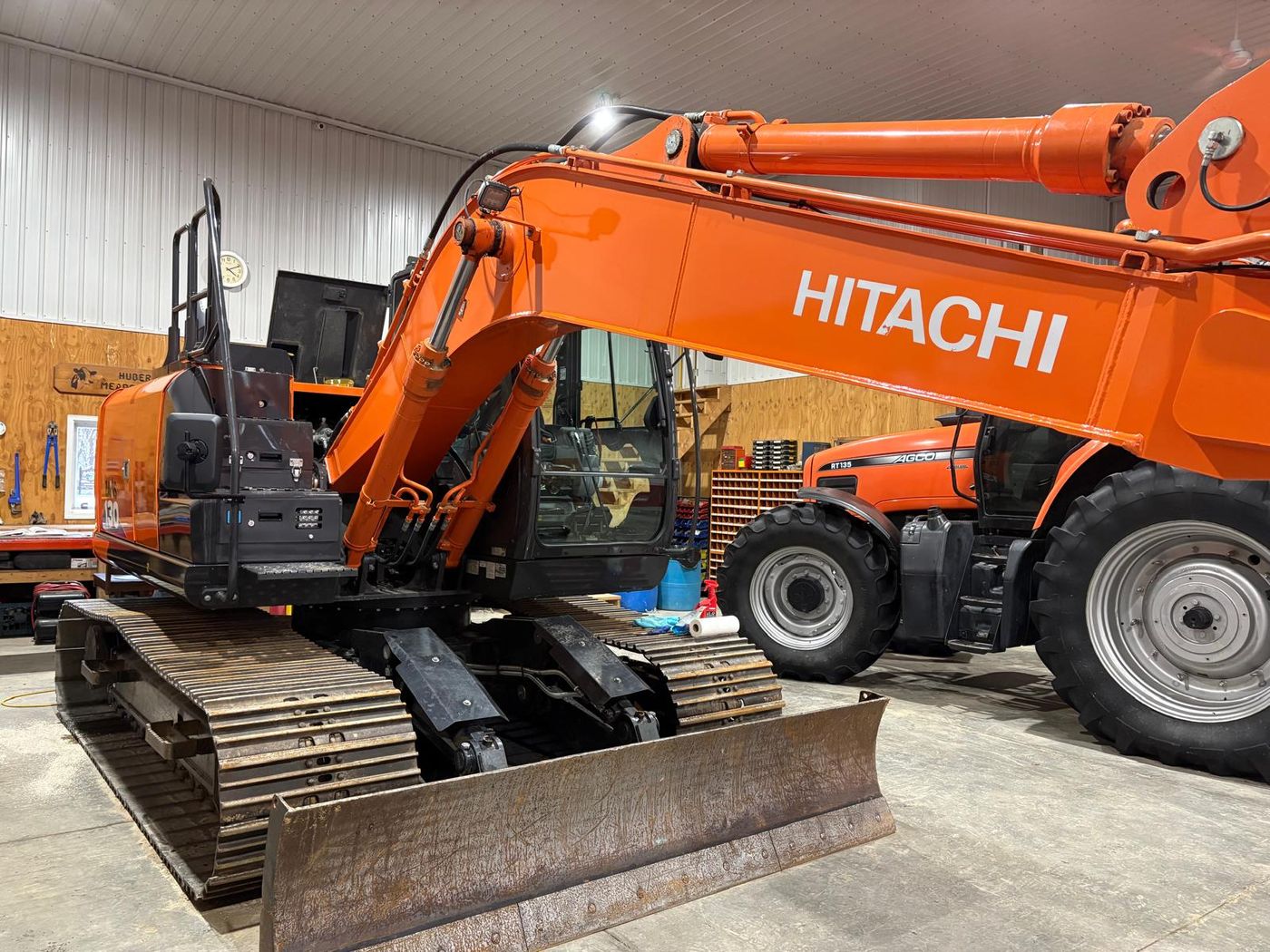
What a coating
actually is.
It is a liquid ceramic that goes on clear, bonds to the paint surface, and cures into a hard glassy layer a few microns thick. It is not a wax. Wax sits on top of paint and comes off with heat, rain and detergent, which is why a waxed machine needs doing again every season. A coating is chemically bonded and stays there.
What you notice day to day is that dirt stops sticking. Dust blows off, mud rinses rather than scrubs, and the machine goes from a two hour wash to a twenty minute one. What you notice over years is that the colour is still where you left it.
Why it matters more
on a tractor.
A modern car has a clear coat, which is already a sacrificial UV layer over the colour. Coating a car adds protection on top of protection. It is nice, and it is a luxury.
Plenty of agricultural paint is single-stage enamel with nothing over the pigment at all. The colour is the top surface, and it takes the sun directly. That is why farm equipment chalks the way it does and cars mostly do not.
So when you coat a tractor, you are not adding a second layer of protection. You are giving that paint the first real protection it has had since it left the factory. The gap between coated and uncoated is far wider on a hood with no clear coat than it is on a pickup, and it shows up in three or four years rather than ten.
What it stands up to out here
Sun is the main one, and it is the reason the whole job exists. Beyond that, a coated surface handles a few things that are specific to this work:
- Fertilizer and manureBoth are chemically aggressive and both etch bare paint if they sit. On a coated panel they sit on the coating instead and rinse off before they reach the colour.
- Chaff and field dustFine dust packs into microscopic texture in bare paint and takes scrubbing to shift. On a slick coated panel most of it leaves with the hose, which means less physical contact and fewer swirls from washing.
- Road saltAnything that runs the shoulder in winter picks it up. Salt is the reason a coated machine still looks presentable in April.
- Tree sap and bird messBoth etch. On coated paint you have a window to get them off instead of a permanent mark.
Prep is the job.
Coating is the last day.
This is the part worth understanding, because it explains the price and it explains why cheap coating jobs go wrong.
A coating is clear and it is permanent-ish. It locks in whatever is underneath. Put one over chalky, oxidized paint and you have sealed the fade in place, glossy on top of dead colour, for the next several years. Getting it off again means cutting the coating back off, which is a worse job than the original correction was.
So the correction comes first, every time. Wash, degrease, decontaminate, cut, refine, then panel wipe to strip every trace of oil and polish residue so the coating can actually bond. That is days of work. The coating itself goes on in an afternoon.
If somebody quotes you a ceramic coating on a faded machine and the price sounds too good, what they are quoting is the afternoon.
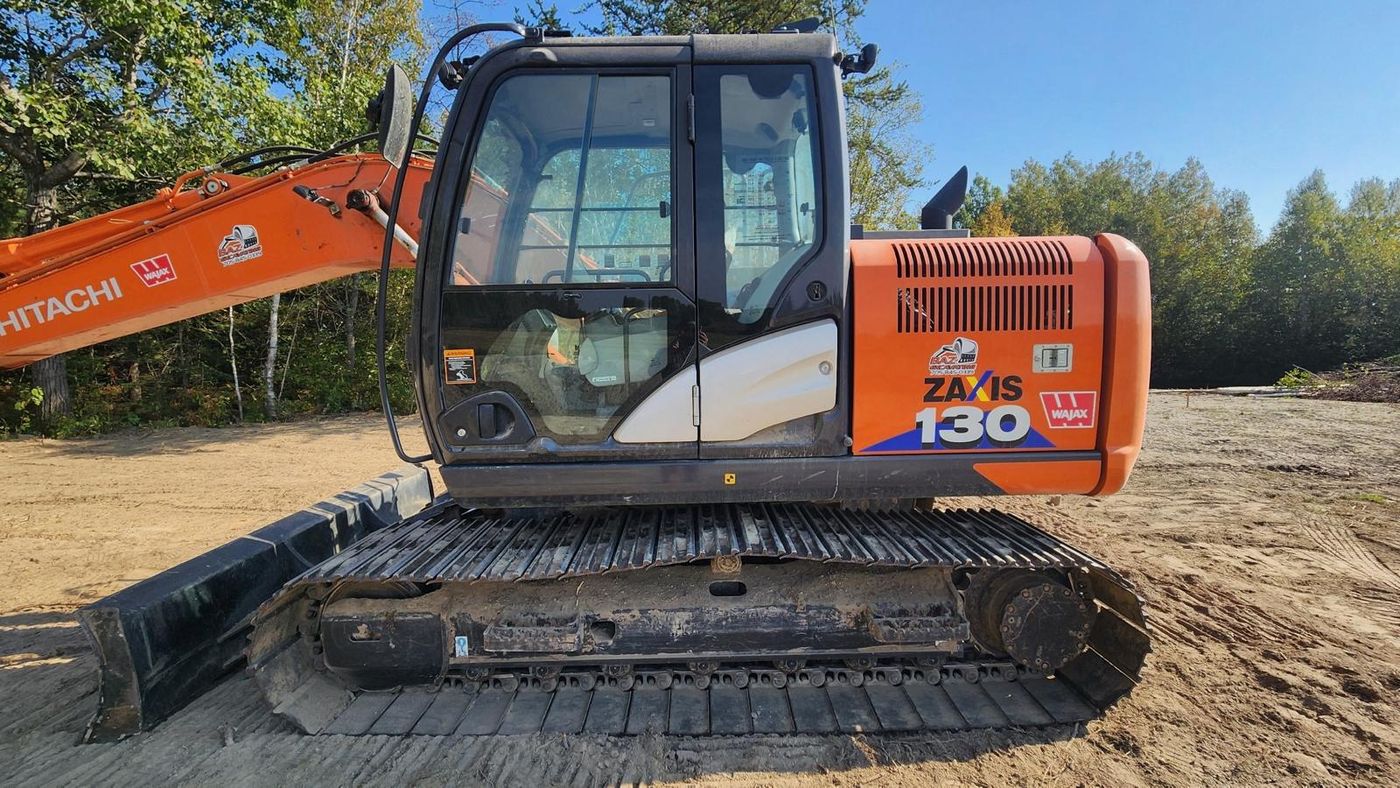
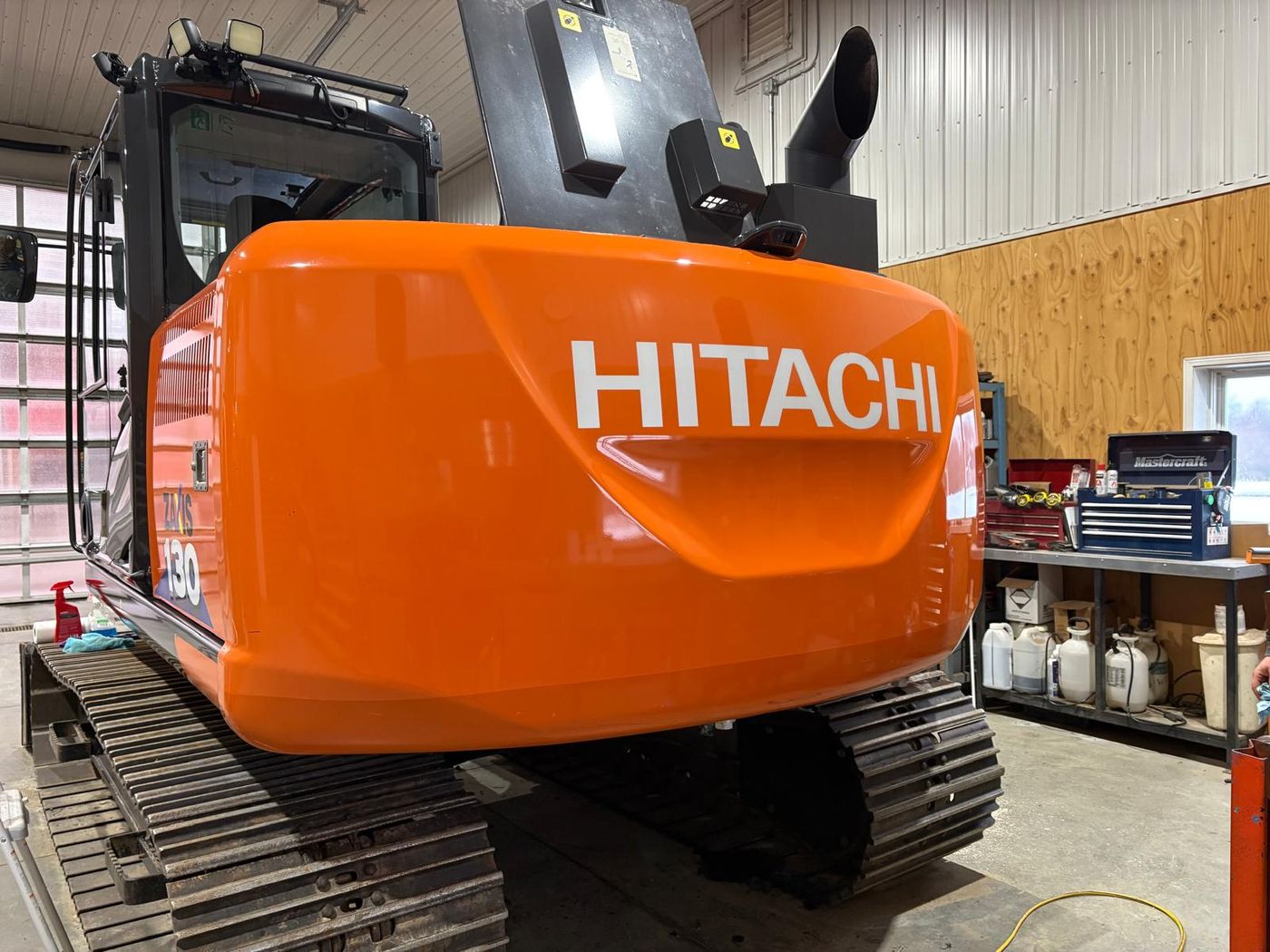
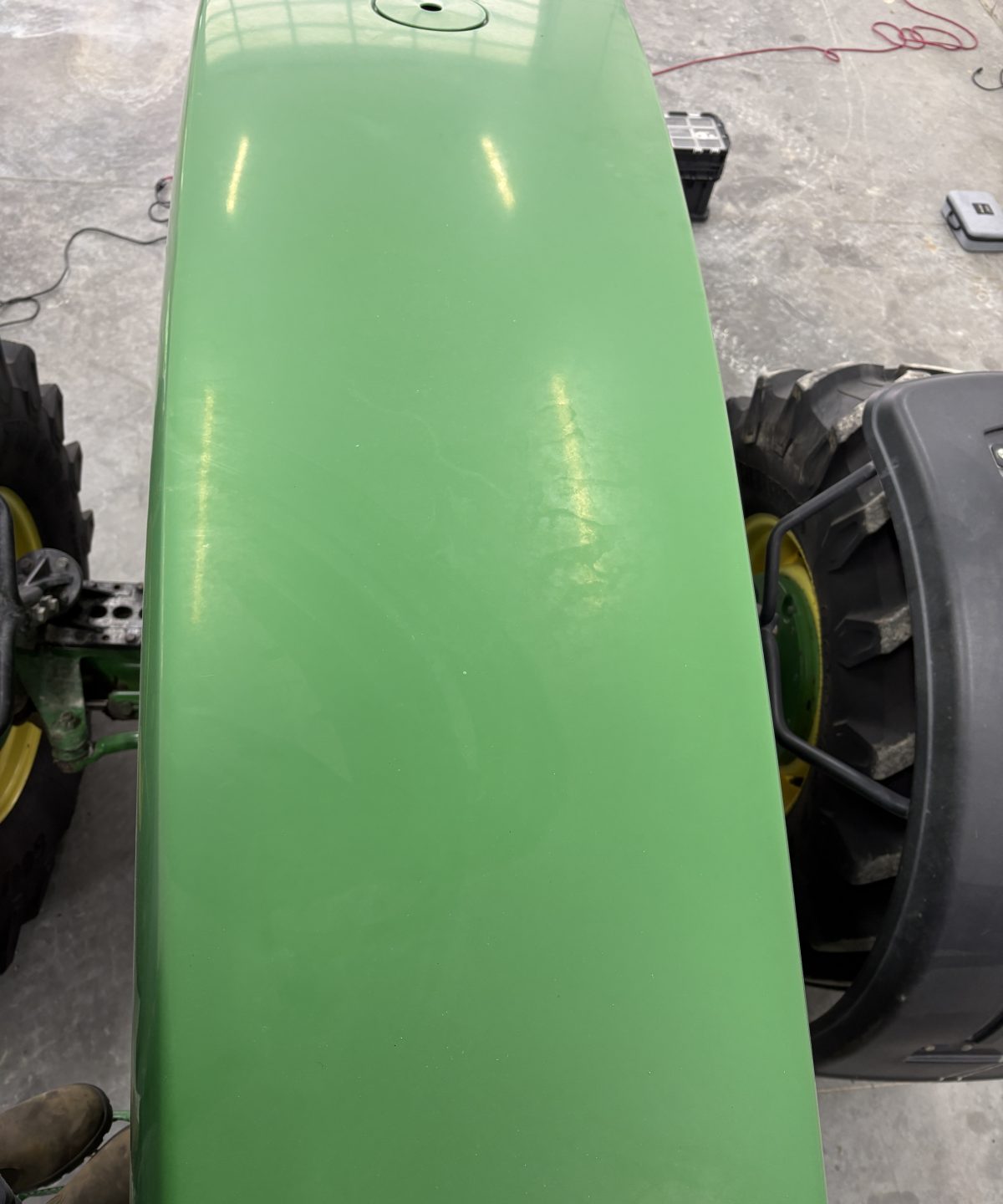
Coated machines.
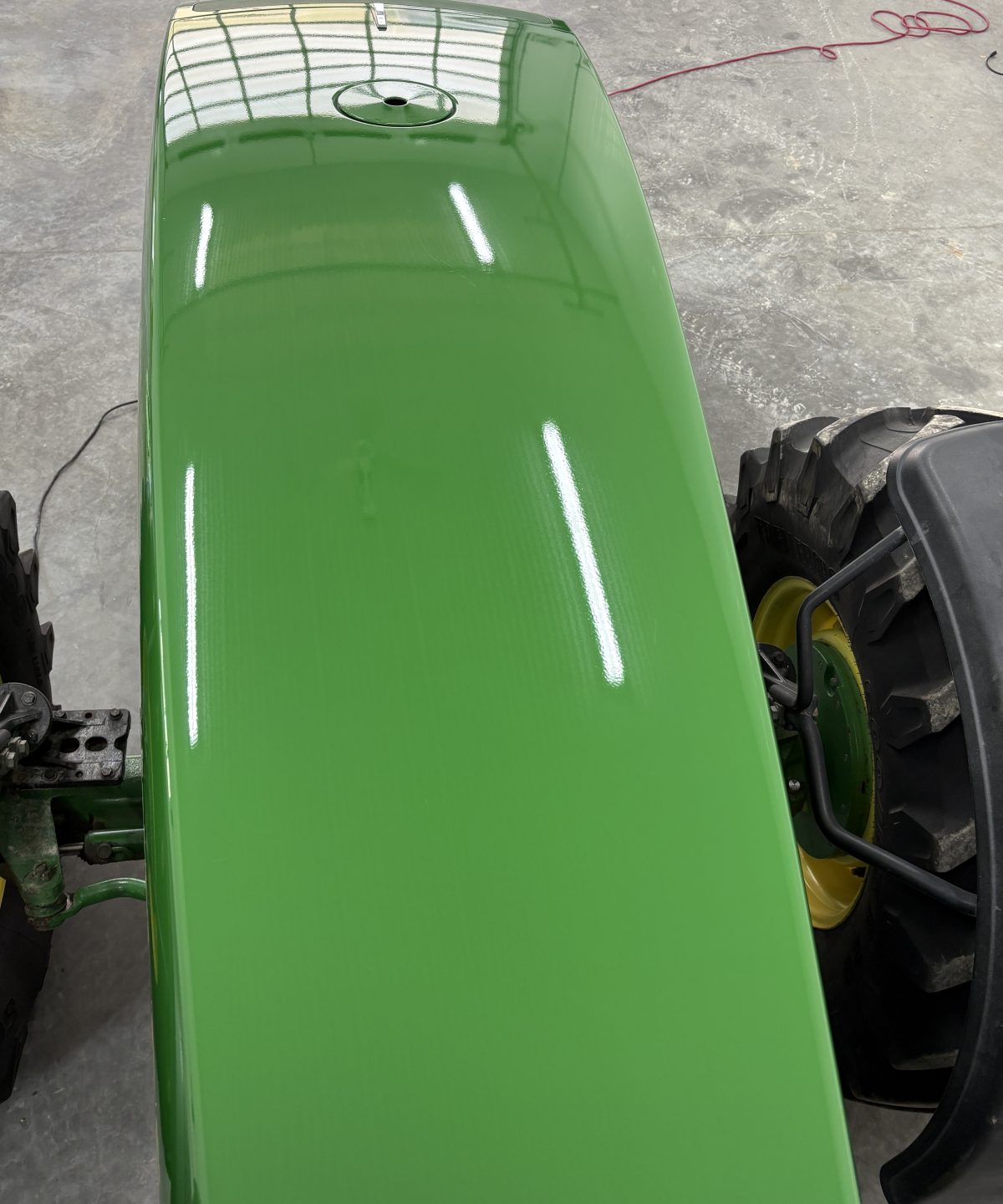
What it will not do.
The coating industry has a marketing problem and I would rather be straight with you than sell you a miracle.
It will not stop scratches. It resists light marring and it makes washing gentler, which prevents a lot of damage indirectly. A branch down the side of the cab still leaves a mark. Anyone promising scratch-proof is selling.
It will not fix bad paint. Gloss comes from the correction underneath. The coating protects and adds a little depth, and that is all.
It is not permanent. It wears, particularly on horizontal surfaces and anywhere that gets brushed daily. It is measured in years, not decades.
It does not mean you stop washing. It means washing gets easy. Dirt left sitting on a coating for a season still does damage.
What it costs.
Price is correction plus coating, so it moves with how faded the machine is as much as how big it is. These are starting points.
Cars and trucks get the six year ProTech Signature Series coating. Combines, excavators and anything oversized are quoted per machine. Travel inside about thirty minutes of Fergus is included, past that it is $0.60 per kilometre.
The machine has to sit dry while it cures. A day or two after I finish, indoors if possible, before it goes back to work or out in the weather. It is the one scheduling constraint on the whole job, and it is worth thinking about before you book a coating the week before harvest.