What gets done
on a machine this size.
The process is the same one I use on a tractor. What changes is the scale, the amount of grease, and the number of things on the machine that a polisher must not touch.
- Degrease first, properlySlew ring, boom pins, hydraulic lines, anywhere oil has been weeping and collecting dust into a paste. This is the longest and least glamorous part of the job and skipping it means dragging grit across the paint later.
- Undercarriage and tracksPacked mud out of the rollers and the track frame. It is filthy work and most people leave it, which is exactly why a buyer looks there first.
- Wash downTop to bottom, including the parts nobody sees from the ground. Cab roof, boom top, counterweight, behind the ladder.
- DecontaminateIron remover and clay on the painted panels. Machines that have been near grinding, cutting or rail work pick up embedded metal that will not wash off.
- Cut and polishCounterweight, cab, boom and side panels. These are big flat surfaces, which makes the before and after obvious from across the yard.
- ProtectSealant wax, or a ceramic coating on a machine that lives outside and works in dust. Coating is the better value on construction equipment for exactly that reason.
- Operator cabStripped out, vacuumed, seat and controls cleaned, glass done inside and out. A clean cab is the thing an operator notices and the thing a buyer sits in.
What makes it different
from a tractor.
The dust is constant. A tractor works in dirt seasonally. An excavator lives in it. Fine grit gets into every texture in the paint and packs there, which is why a machine can look permanently dull even right after a wash. It is not the paint, it is what is sitting in it, and it takes decontamination rather than washing to shift.
Orange lies to you. Hitachi orange, and construction orange generally, hides dust better than any other colour on a machine, right up to the point where it does not. Owners are often surprised at how much brighter the machine goes, because they had stopped seeing the fade years ago.
The decals matter more. A tractor has a model number and a few warnings. Heavy equipment carries load charts, capacity plates, lifting points and safety labels, and some of them are legally required to be legible. They are expensive to replace and slow to source. Every one of them gets worked around by hand.
Access is a real problem. Boom tops and cab roofs are ten feet up. Bring a ladder, or the top half of the machine does not get done, which anyone looking down from a truck cab will notice immediately.
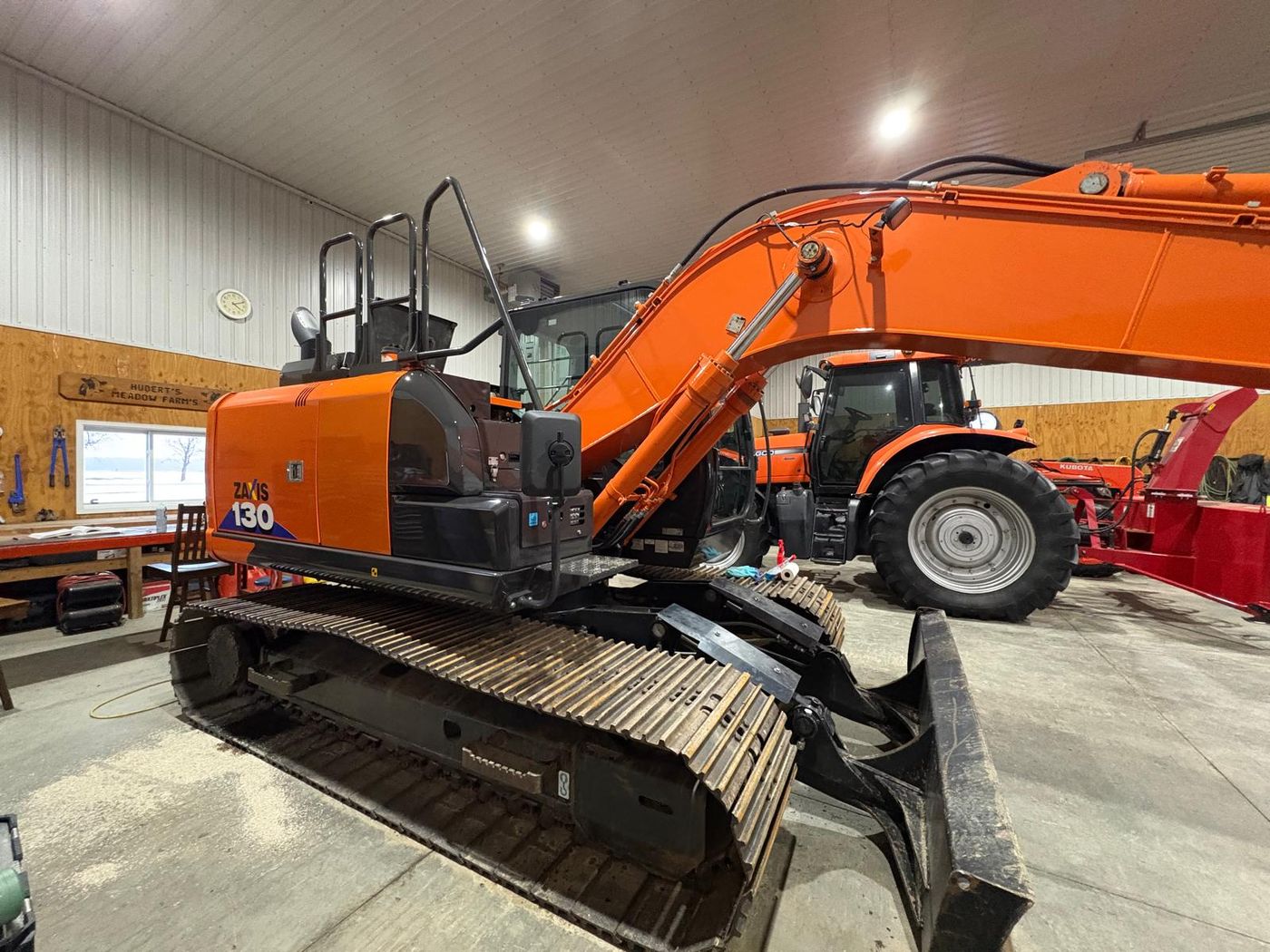
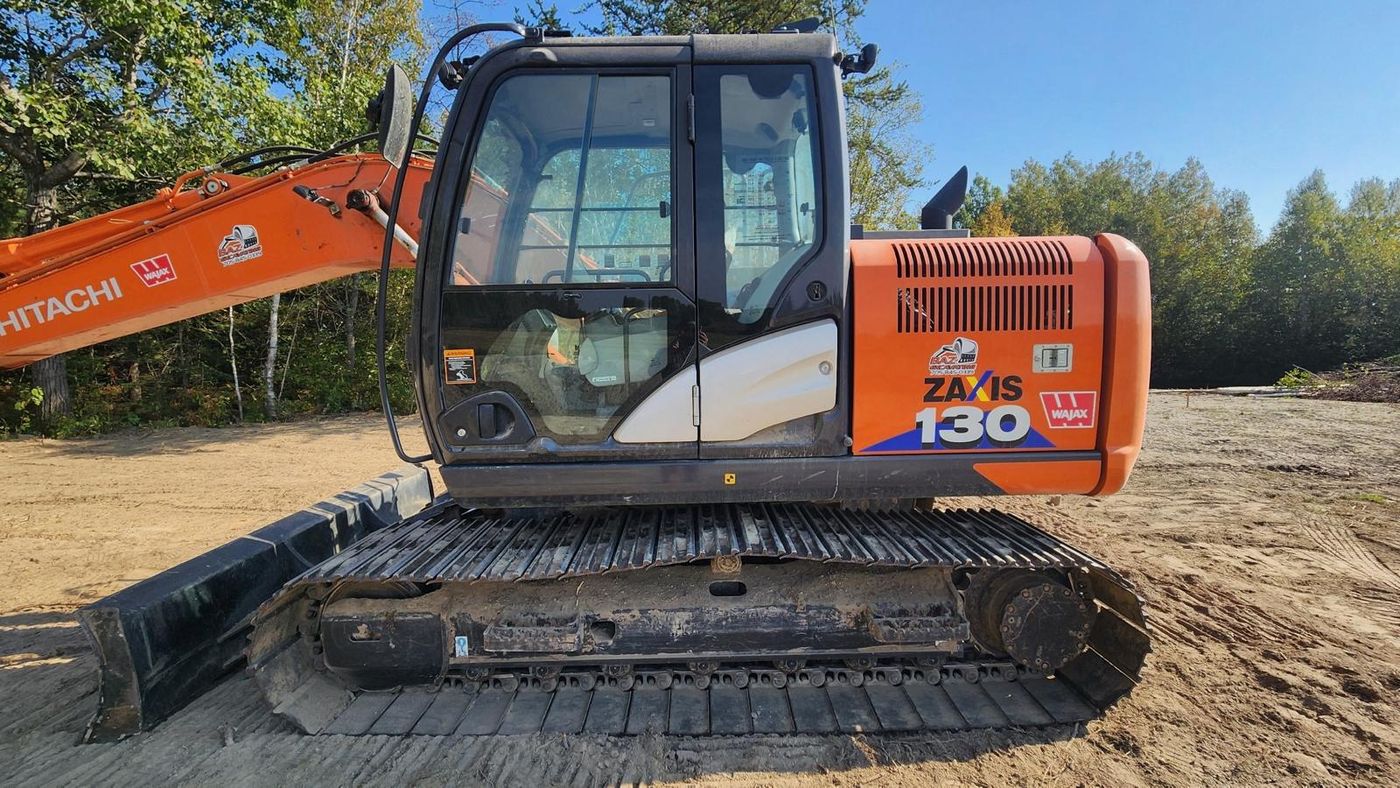
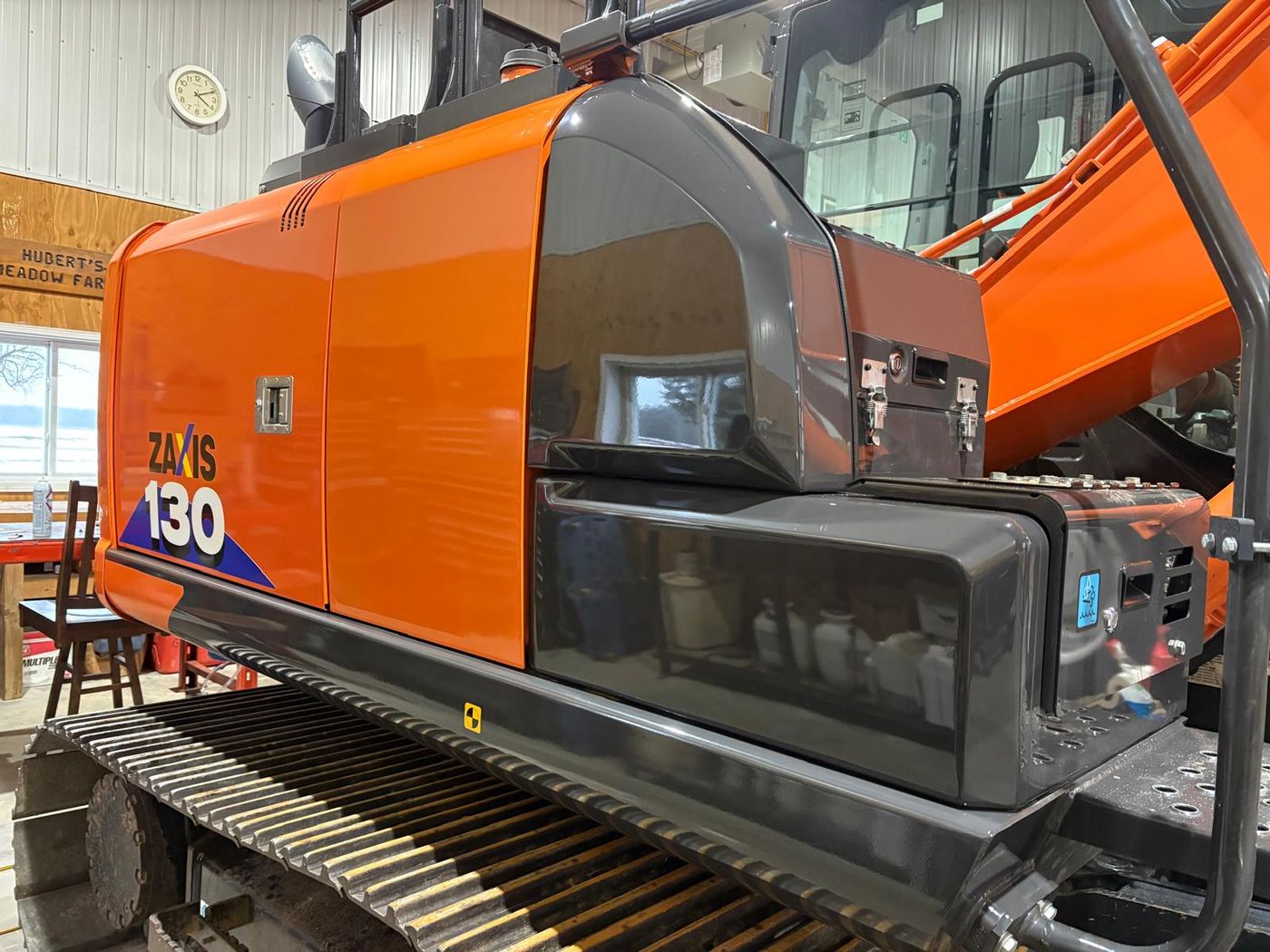
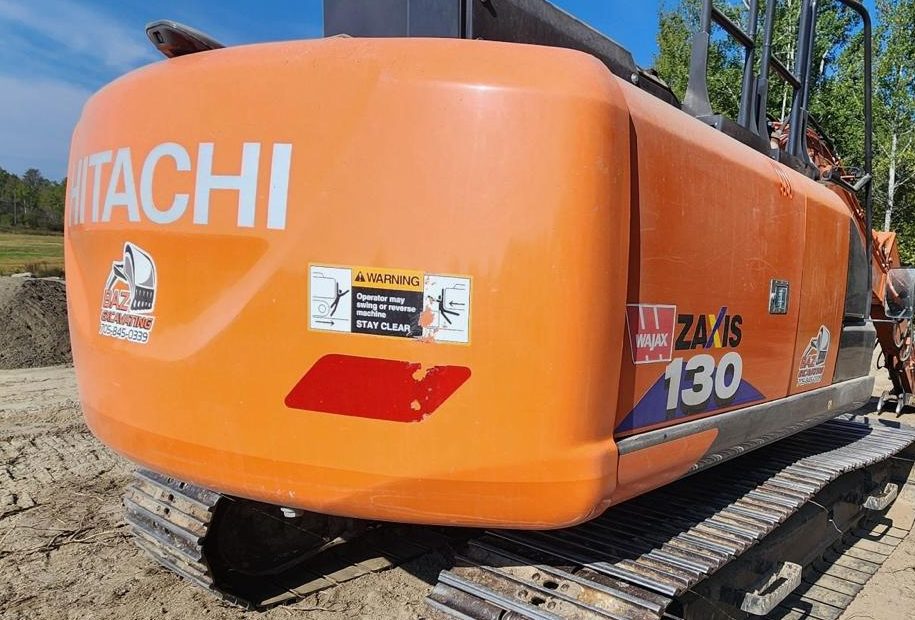
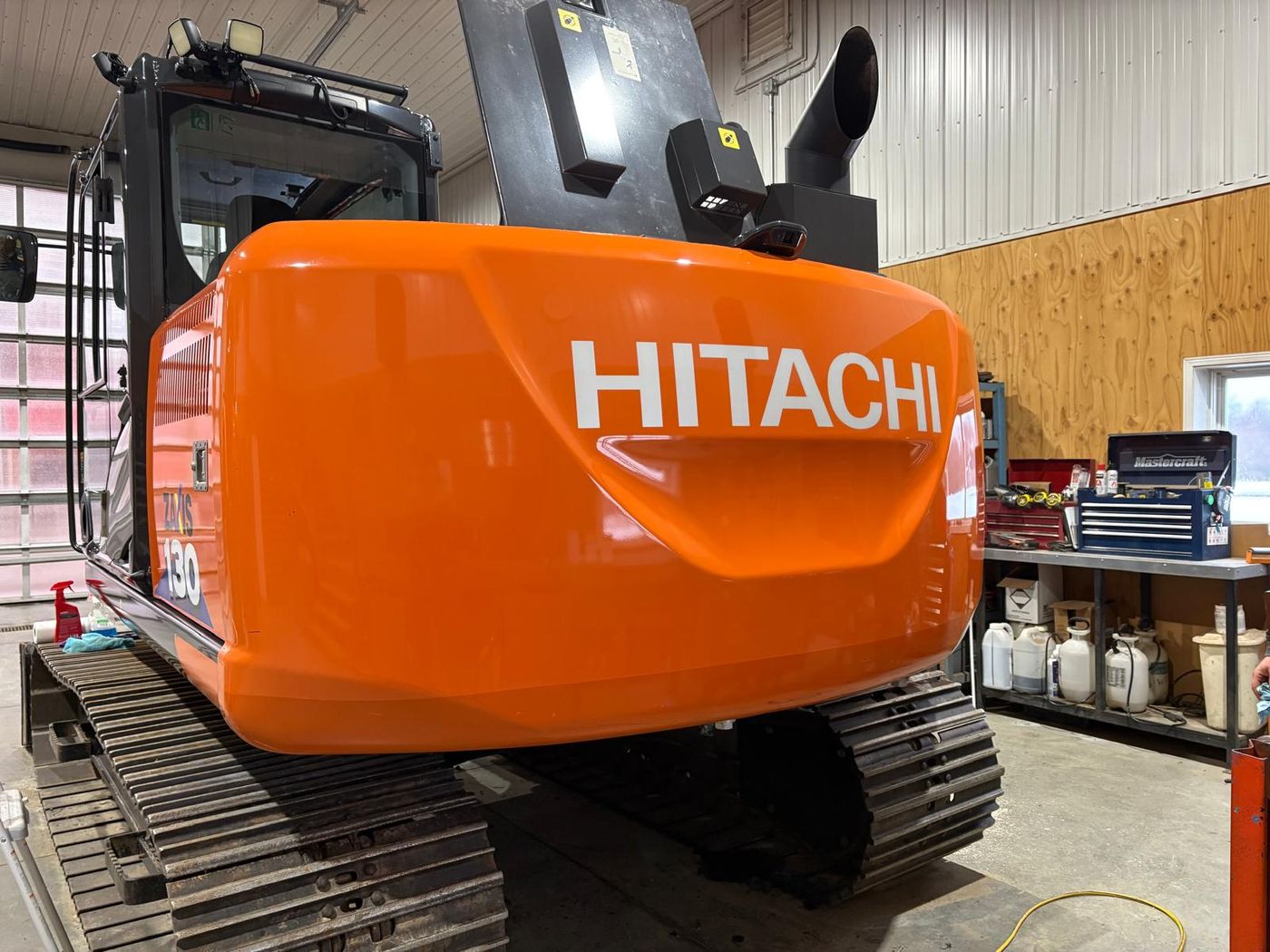
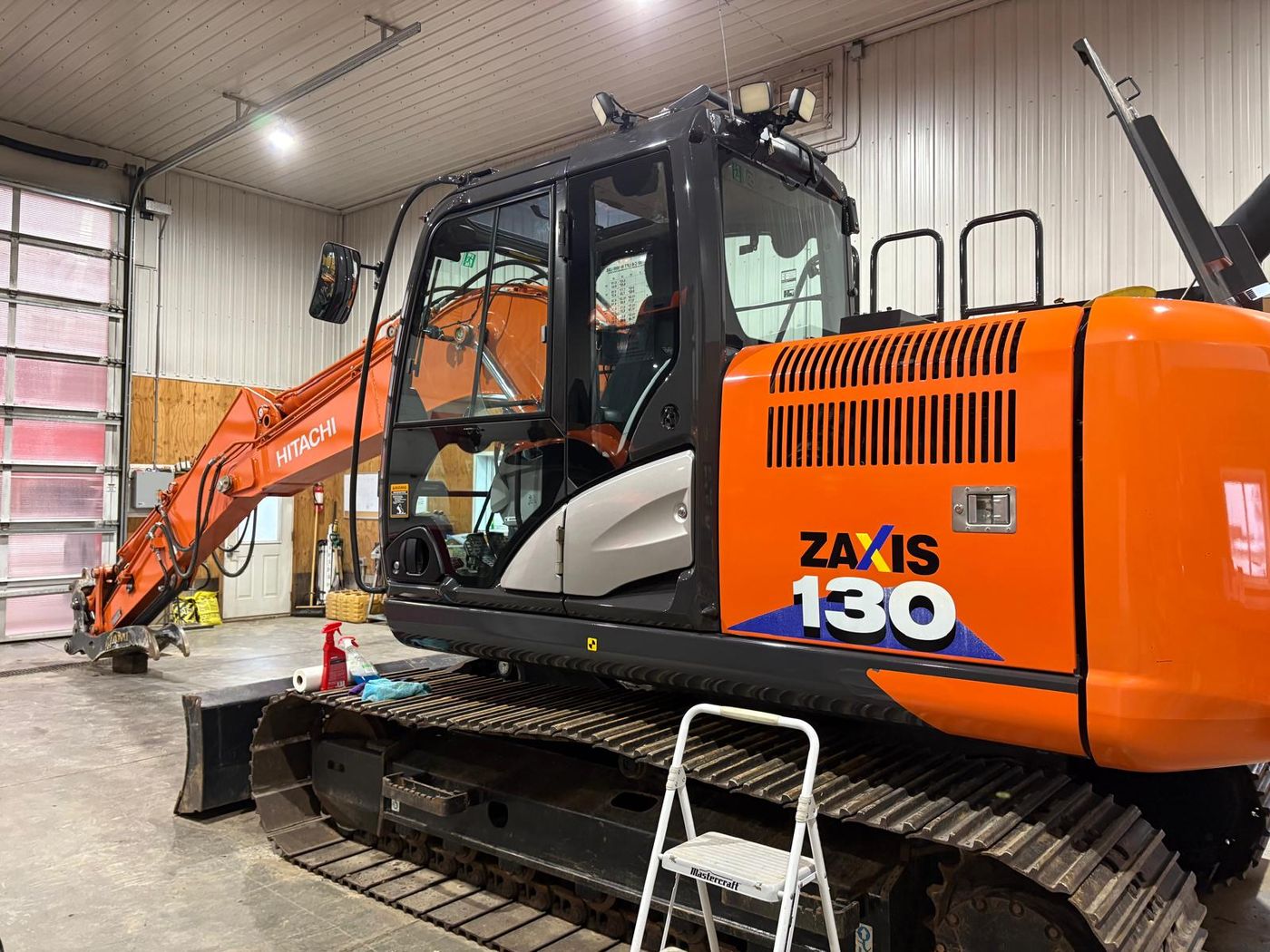
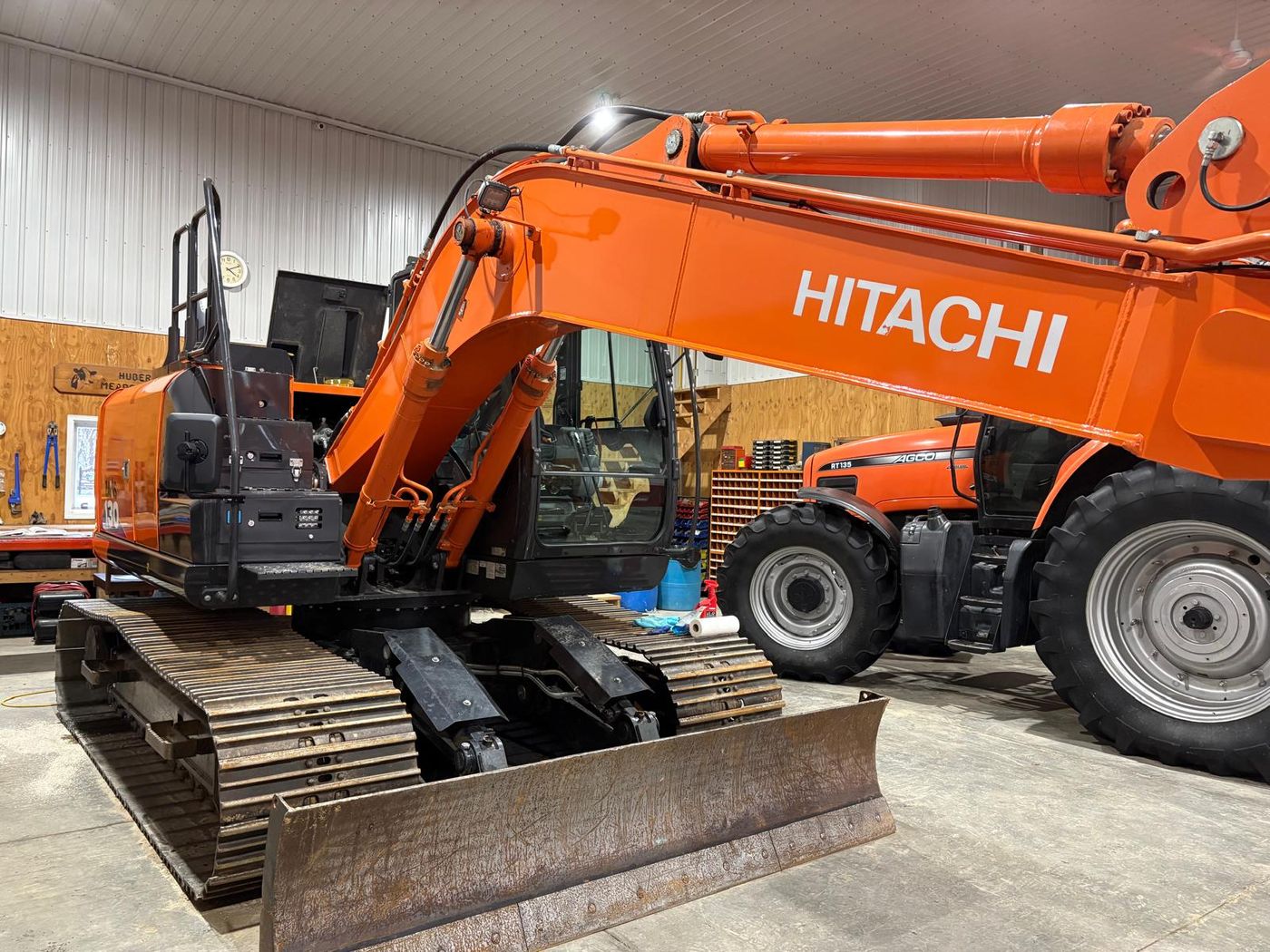
A Hitachi ZX130,
start to finish.
This one came in dusty, chalky and looking every hour it had on it. Corrected and coated over a few days, in the shop and then back out on site.
Selling it?
Do this first.
Detailing before a sale is the highest-return work I do, and it is more true on construction equipment than on anything else. Machines get bought off photographs, often by someone three hours away who is deciding whether the trip is worth making.
A buyer cannot assess your hydraulics from a listing. What they can see is whether the machine looks looked-after, and they use that as a stand-in for everything they cannot check. A clean, glossy machine with a tidy cab reads as maintained. A dusty one with a filthy cab reads as run hard and ignored, whether or not that is true.
If you have a sale or an auction coming up, there is a separate page on how to time it.
What it costs.
Heavy equipment is quoted per machine, because size and condition vary far more than they do on tractors. A skid steer and a 30 tonne excavator are not the same conversation. These are the starting points.
Cab deep-clean is $150 on its own. Travel inside about thirty minutes of Fergus is included, past that it is $0.60 per kilometre. You get a firm number before I start.
I need water at the machine and somewhere level to work. Everything is done on site, so I need to run a hose where the machine is sitting and get around it safely. An active site with no water hookup is the most common booking problem I run into. If the machine can be moved to a yard or a shop for a few days, the polish stages come out better anyway, because wind-blown grit and a freshly cut panel do not mix.