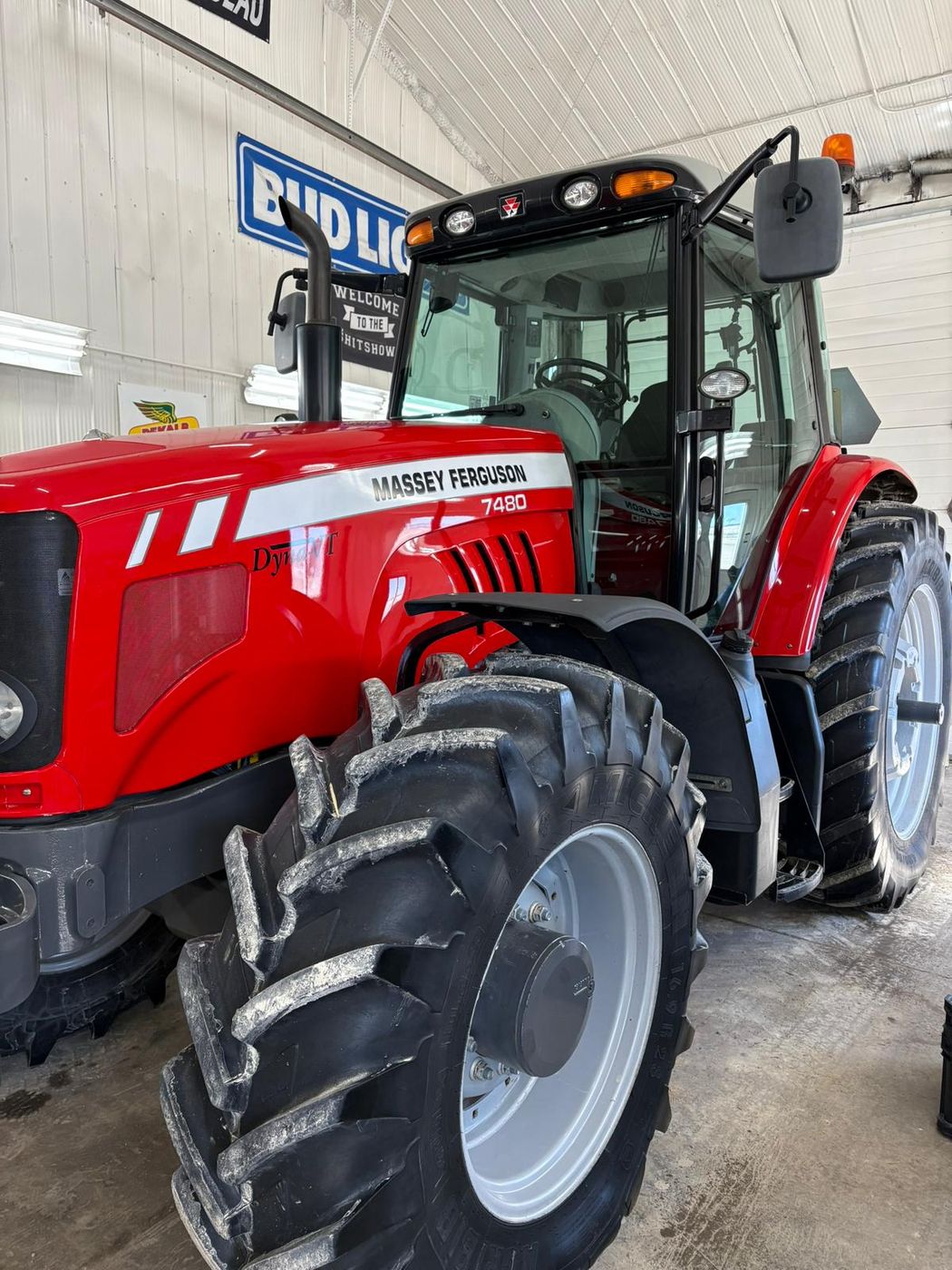
Nobody bids
on a dirty machine.
I'm not going to quote you a percentage. Anybody who tells you a wash adds fifteen percent to your sale price is making the number up, and you should be suspicious of them generally.
Here's what I do know, from being around this stuff.
Your machine is a thumbnail. On an online listing it sits in a grid next to eleven others that are roughly the same model, roughly the same hours, roughly the same year. The one that photographs well is the one that gets clicked, and the one that gets clicked is the one that gets bid on. That's the whole mechanism. A faded hood in a photo reads as neglect whether or not the machine was ever neglected.
And at a live sale, the guy walking the line is looking for reasons to bid less. He's not appraising it, he's hunting for problems. Grease caked behind the wheels. A cab full of coffee cups and mouse nests. Glass so hazed you can't see the dash through it. Every one of those is a reason, and every reason costs you.
None of that changes what the machine is. It changes what people think it is, which for the forty minutes that matter is the same thing.
What I do differently
for a sale.
Prepping a machine to sell is not the same job as making a machine nice for its owner. The priorities shift, and if you're paying me for one you shouldn't be paying for the other.
- The panels the camera sees first. Hood, side shields, the operator side. That's where the listing photos land and that's where the correction budget goes.
- The cab, more than anything. A buyer opens the door and climbs in, and that's usually the moment they decide. Clean seats, clean headliner, no smell, no mouse evidence. This is the cheapest thing on the list and it moves the needle more than the paint does.
- Glass, inside and out. Hazed glass makes a machine look tired even when the paint is good. Costs almost nothing to fix.
- Degrease the running gear. Behind the wheels, the rear end, the belly. This is where the inspection eyes go.
- Tires and rubber dressed. Last step, and it's what makes the photos look sharp.
What I don't do is cover anything up. If there's a rust bubble it stays a rust bubble. I'm not putting anything on a machine to mask a weep or a crack. Beyond the fact that it's dishonest, it's bad selling. A buyer who finds a hidden problem doesn't negotiate, he leaves, and he tells people.
If the machine is worth eight grand, don't spend two thousand on it. I'll tell you when the numbers don't work. On a lower-value machine a wash, a degrease and a proper cab clean gets you most of the benefit for a fraction of the money, and the full paint correction is money you won't see again. Text me a few photos of the machine and I'll tell you straight on the phone what's worth doing. That conversation costs you nothing and it happens before I quote, not after.
When to book.
Three weeks ahead if you can manage it, and here's the part people get wrong: the deadline is the photos, not the sale.
Listing photos usually go up well before the machine actually sells, sometimes weeks before. If the tractor gets detailed the day before sale day, everybody who has already scrolled past your listing scrolled past the dirty version. Work backwards from when the photos are taken.
Late winter and spring is the crunch. That's when most equipment sales run in Ontario and it's when my calendar goes solid, so if you know in January that something's going in March, call in January.
While you're at it, the photos
I don't take the listing photos, but I've watched enough good machines get photographed badly to have opinions.
Shoot on an overcast day. Direct sun blows out the highlights and hides the gloss you just paid for, whereas flat light shows the depth in the paint. Get the machine off the gravel and onto grass or clean concrete if you can. Shoot from a low angle, roughly hood height, because it makes the machine look like something. And take one of the clean cab. Buyers scroll straight to it.
What it costs.
Depends entirely on the machine and how far you want to go. These are the starting points.
Most pre-sale jobs land somewhere between the first two, depending on how much time there is before the sale and what the machine is worth. Travel inside about thirty minutes of Fergus is included, past that it's $0.60 per kilometre. You get a firm number before I start.
I need a water hookup where the machine is parked. All the work happens on site. If the tractor is sitting at an auction yard or out in a back field with no water, we need to sort that out before booking. Worth checking before you call.
Auctions, trade-ins
and farm dispersals.
Same work, slightly different timing.
For a consignment or online sale, the photo date is the deadline. For a dealer trade-in, get it done before the appraiser comes out, because his number is the one you're stuck with. For a private sale, honestly, a clean machine sells faster more than it sells higher. It's the difference between three tire-kickers and one guy who shows up with a trailer.
Farm dispersals are their own thing. When there's a whole line of equipment going, we look at which two or three machines carry most of the value and put the real work into those, then run a wash and cab clean across everything else. That's a multi-week job and it needs booking well in advance, so if a dispersal is coming, call early even if the date isn't fixed yet.