What a tractor detail
actually involves.
Most people picture a pressure washer and a bucket. That's the first hour. The rest of it is paint work, and it's the part that makes the difference between a clean tractor and one that stops people in the yard.
Here's the order I work in.
- Photos and a phone callMost jobs start with a few pictures texted to me — the hood, the worst panel, the cab. Fade, decal condition, grease behind the wheels, whether there's clear coat left: I can read most of that off a photo and give you a real number on the phone. I confirm it against the machine when I get there, before anything starts.
- Degrease and washEverything comes off first. Chaff, dust, old grease, whatever has baked onto the exhaust. Polishing over grit is how you put swirls into paint you were trying to fix.
- DecontaminateIron remover and clay across the panels. Farm paint picks up embedded metal from brake dust, grinding, road salt and rail dust, and none of that washes off. You can feel it with a bag over your hand.
- CutThis is the step that removes the fade. A compound and a cutting pad take off the dead, oxidized layer and expose live colour underneath. It's also the step where things go wrong if you're heavy-handed, so I test a small panel first and work up from the gentlest thing that will do the job.
- PolishCutting leaves fine haze. Polishing refines it out and brings up the gloss. On a badly gone machine this is a second and sometimes third pass.
- ProtectEither a sealant wax, which is the affordable option and gets you a season or so, or a ceramic coating, which bonds to the paint and holds gloss and shed for years. On equipment that lives outside, ceramic is worth it.
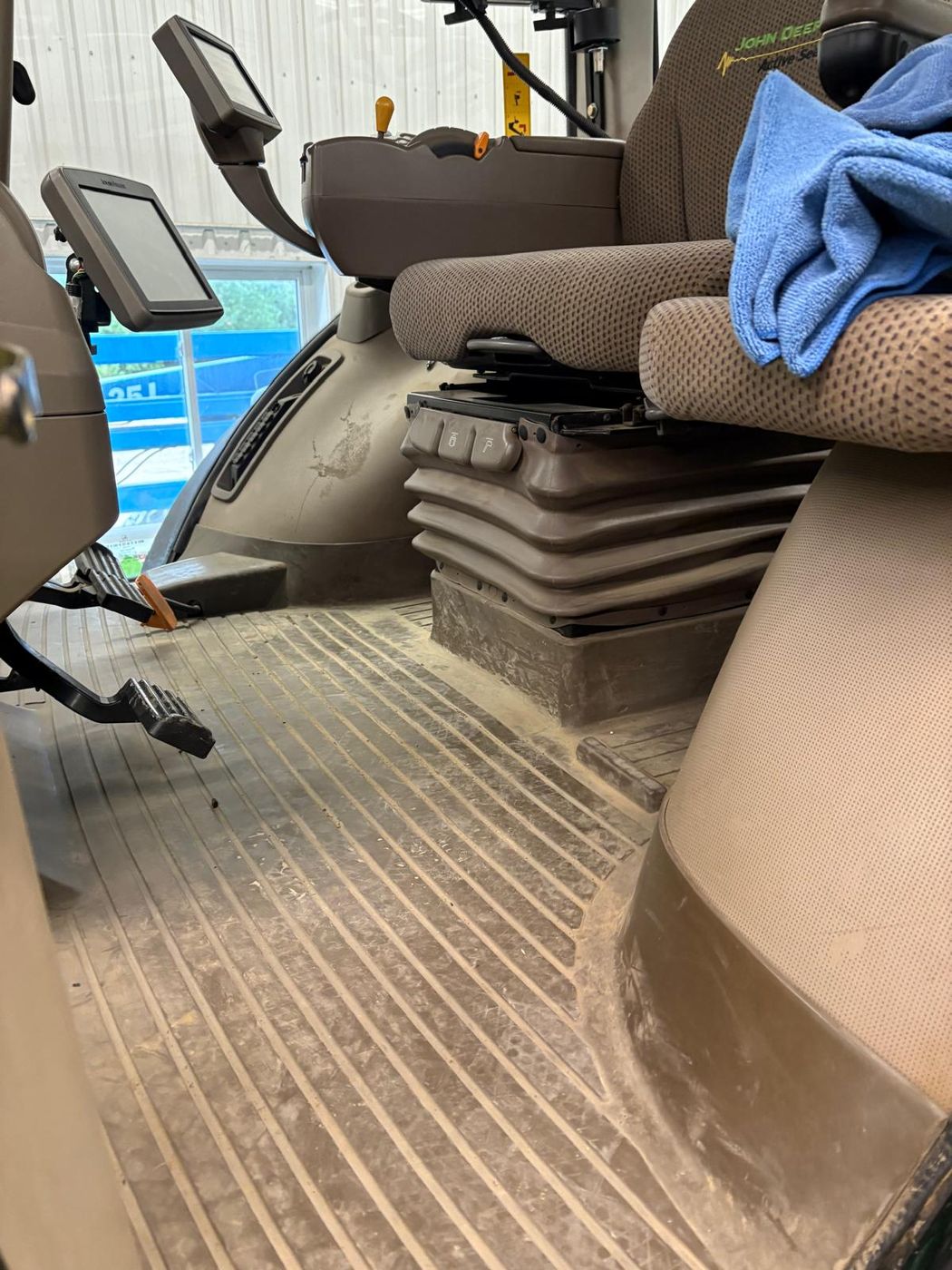
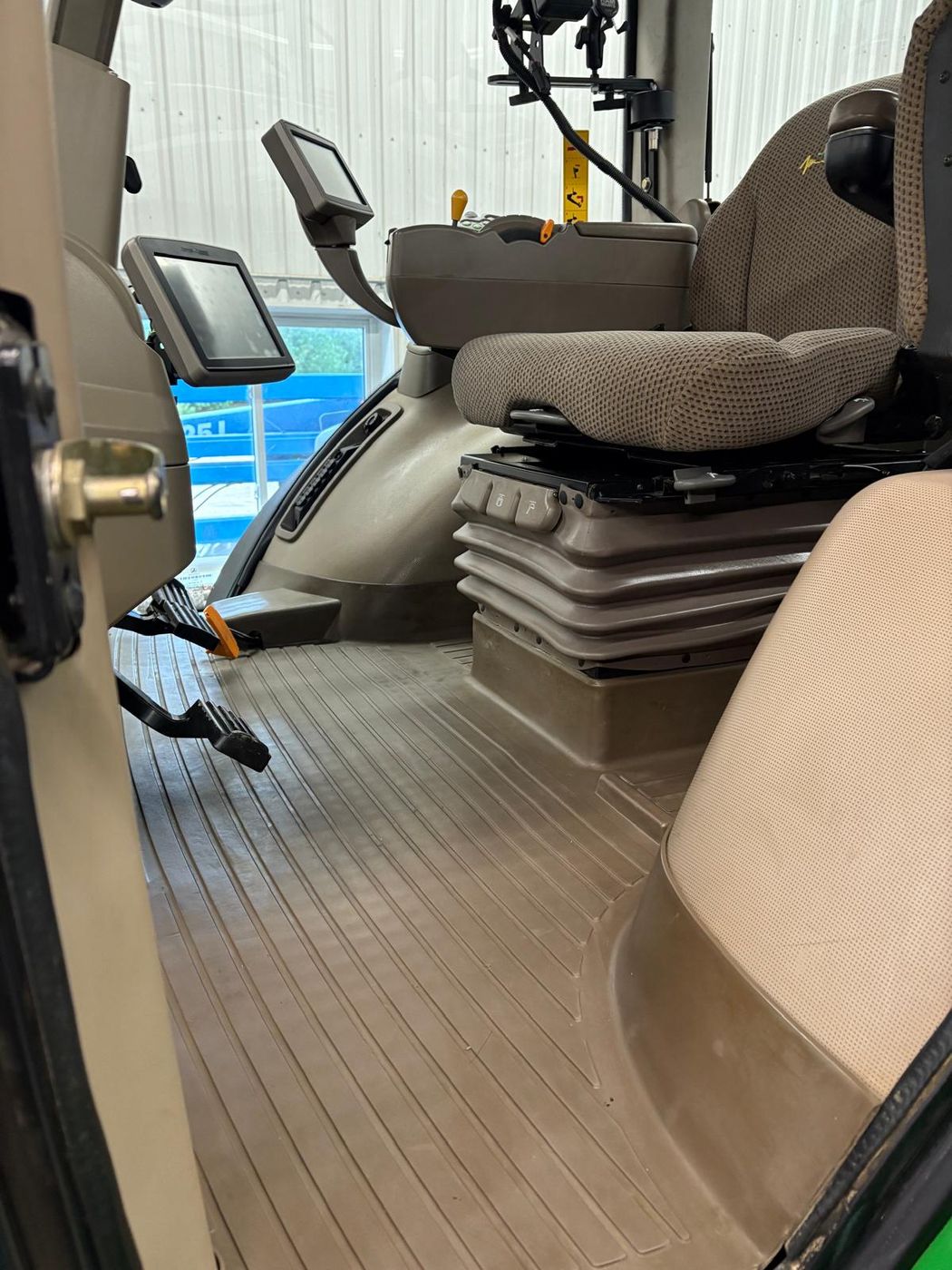
- CabSeats, headliner, floor, all the crevices where seed and dust collect, glass inside and out. Most cabs I open have twenty years of somebody's lunch in them.
- Final walk-aroundTires and rubber dressed, glass checked in daylight, and I walk it with you before I pack up.
Faded farm paint
is not car paint.
This is the thing most auto detailers get wrong on their first tractor, and it's worth understanding before you hand anyone a polisher and point them at your machine.
Modern cars have a clear coat. It's a sacrificial layer sitting on top of the colour, and when you polish a car you're cutting into clear, not into paint. There's forgiveness built in.
A lot of older agricultural iron ran single-stage enamel with no clear at all. The colour pigment is right there at the surface, taking UV straight on the nose, every day, all summer, for thirty years. It fades from the top down. That white chalk you can rub off with your thumb is dead pigment.
Which means when I cut a single-stage hood, I'm removing colour. There's a finite amount of it, and once it's gone it's gone. So a machine gets maybe one or two proper corrections in its life, and after that you're maintaining, not correcting. That's why I start conservative and step up only if I have to.
Green, red and everything in between
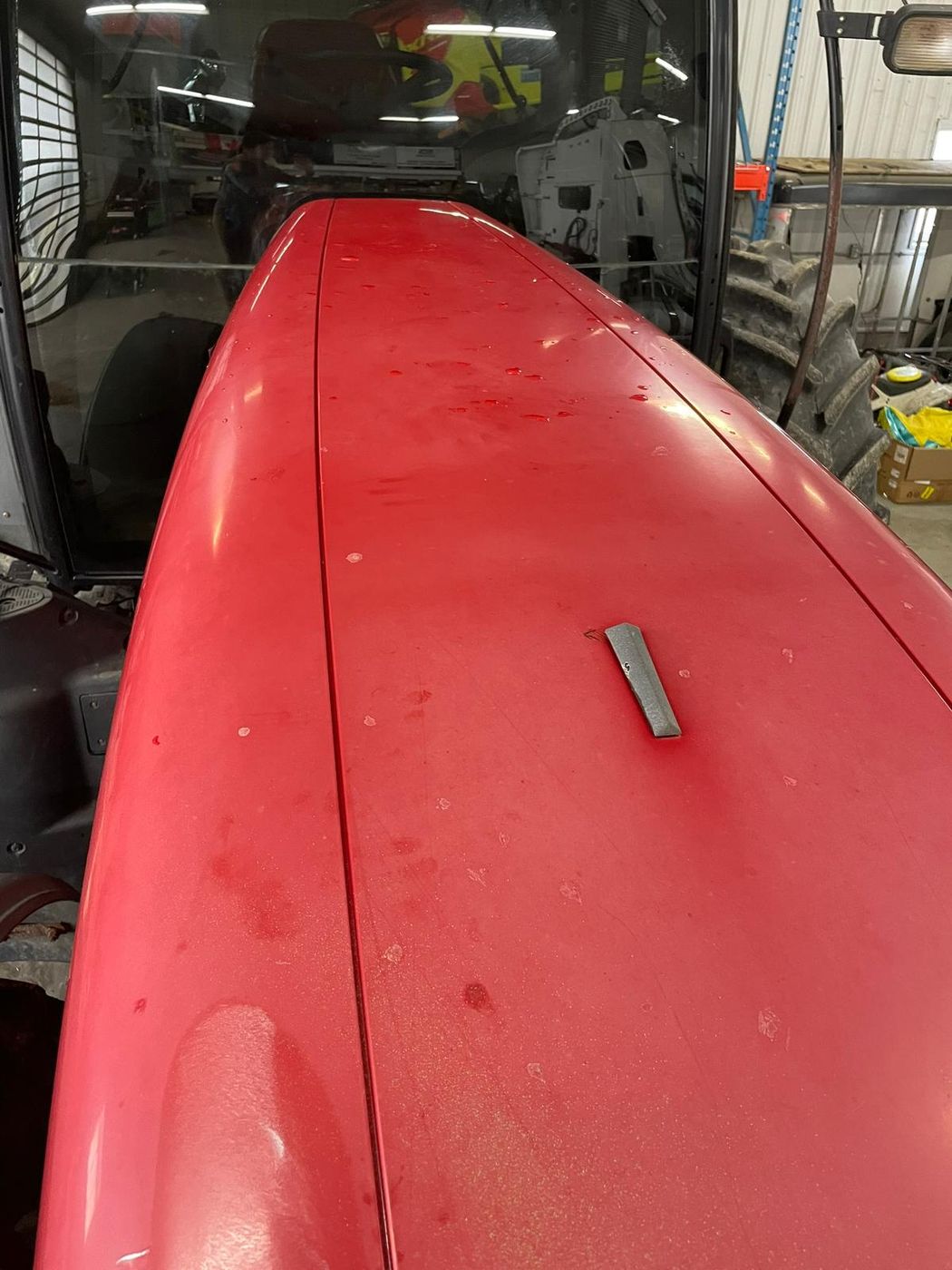
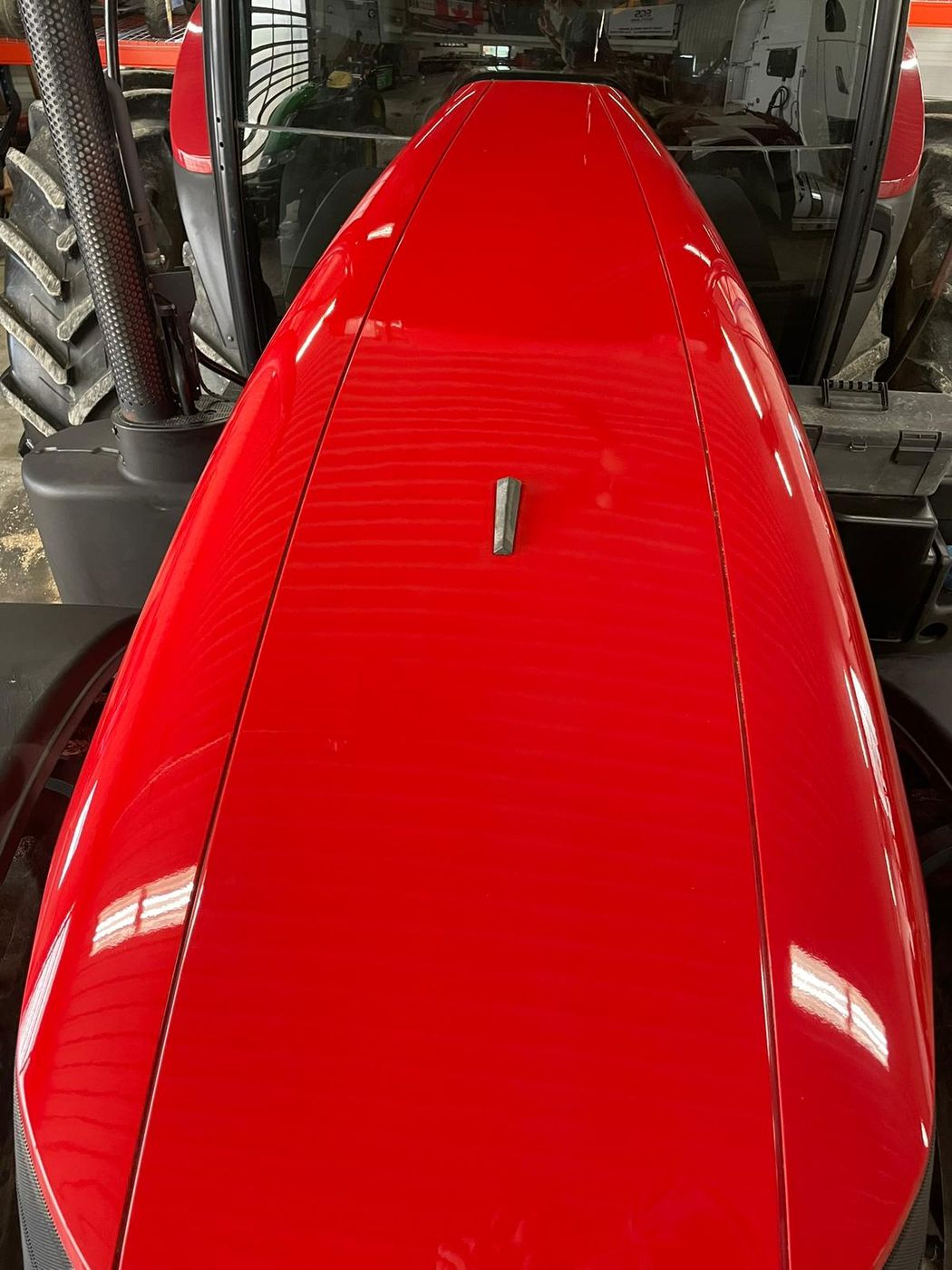
Colours don't age the same way. Red is the worst of them. Red pigment breaks down faster than any other colour under UV, which is why an old red tractor goes pink and powdery while a blue one of the same vintage still looks respectable. It's also why red gives the most dramatic before and after in this whole business. The hood on a faded red machine can look like two different tractors from one side of the tape line to the other.
Green chalks rather than shifts colour, and the yellow trim and wheels usually go dull well before the green does. Orange sits somewhere in the middle and tends to look worse than it is, because the dust hides in it.
Decals are the thing that ends careers
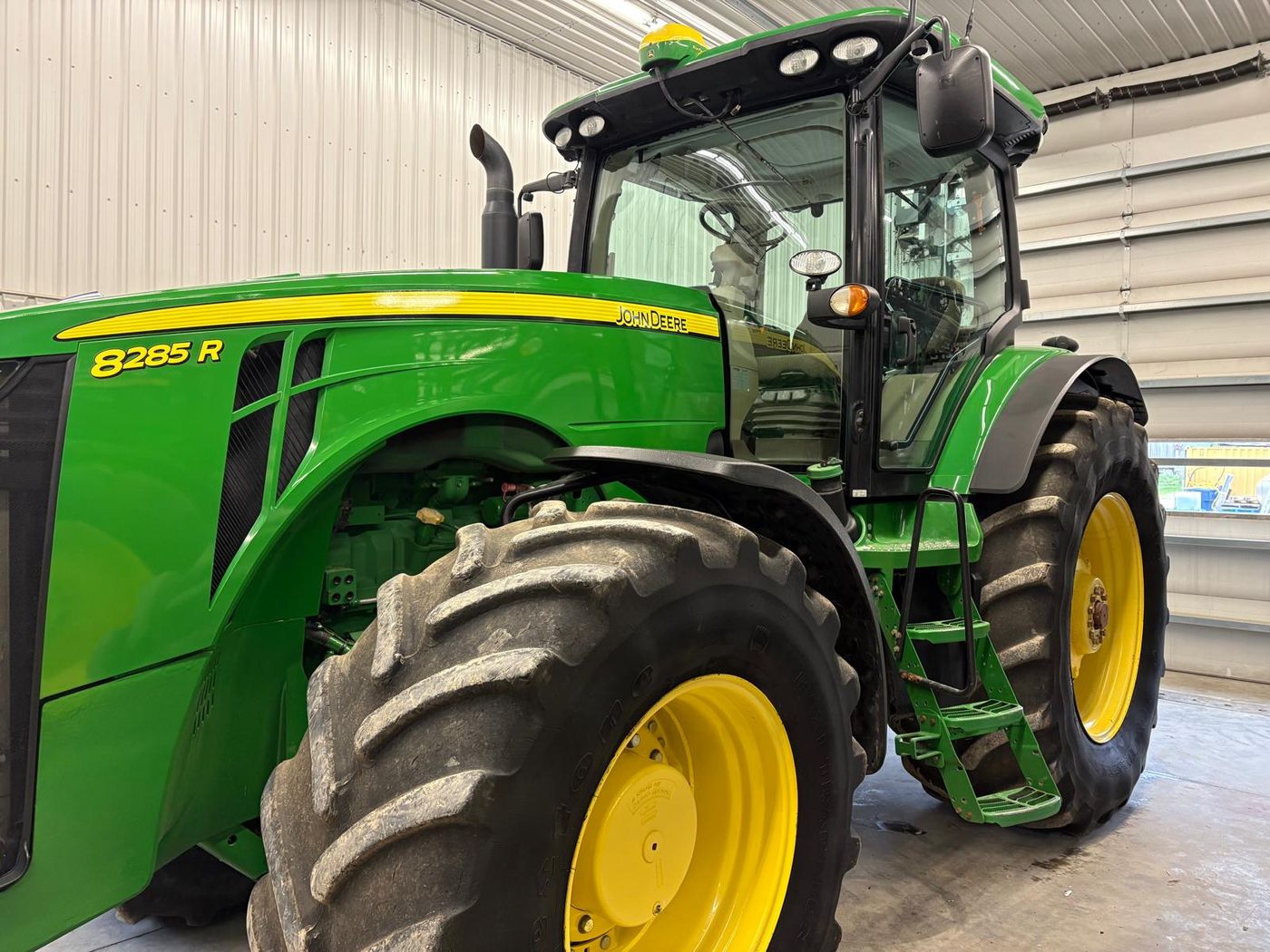
Hood decals, model numbers, warning labels. A machine polisher run at speed across a decal edge will lift it, and once a corner is up there is no putting it back on. You're then explaining to a customer why their 8285R now says 828.
I work around decals by hand and slow right down anywhere near an edge. If a decal is already lifting or cracked before I start, I'll show you and we'll decide together whether to work around it or leave that panel alone.
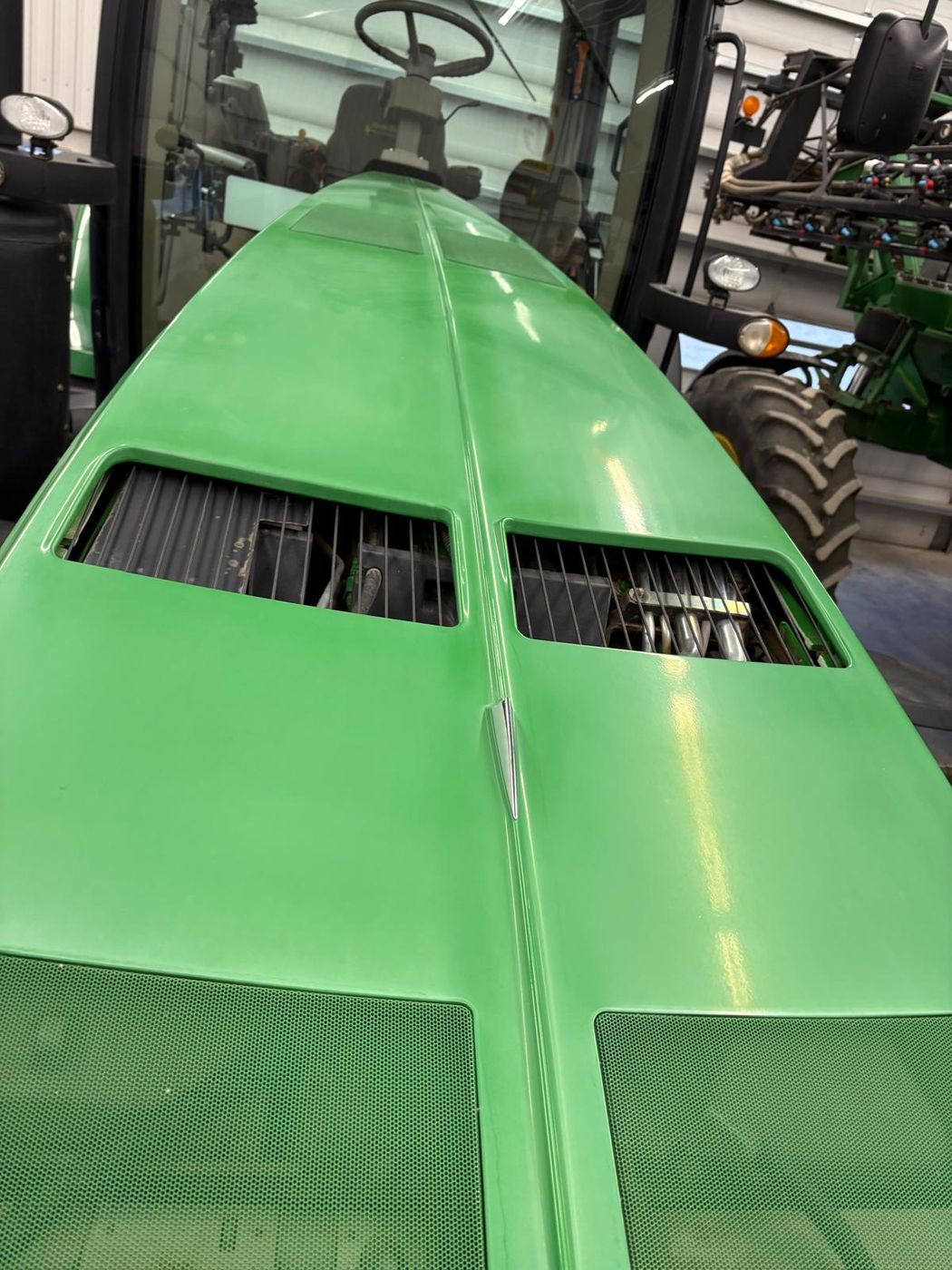
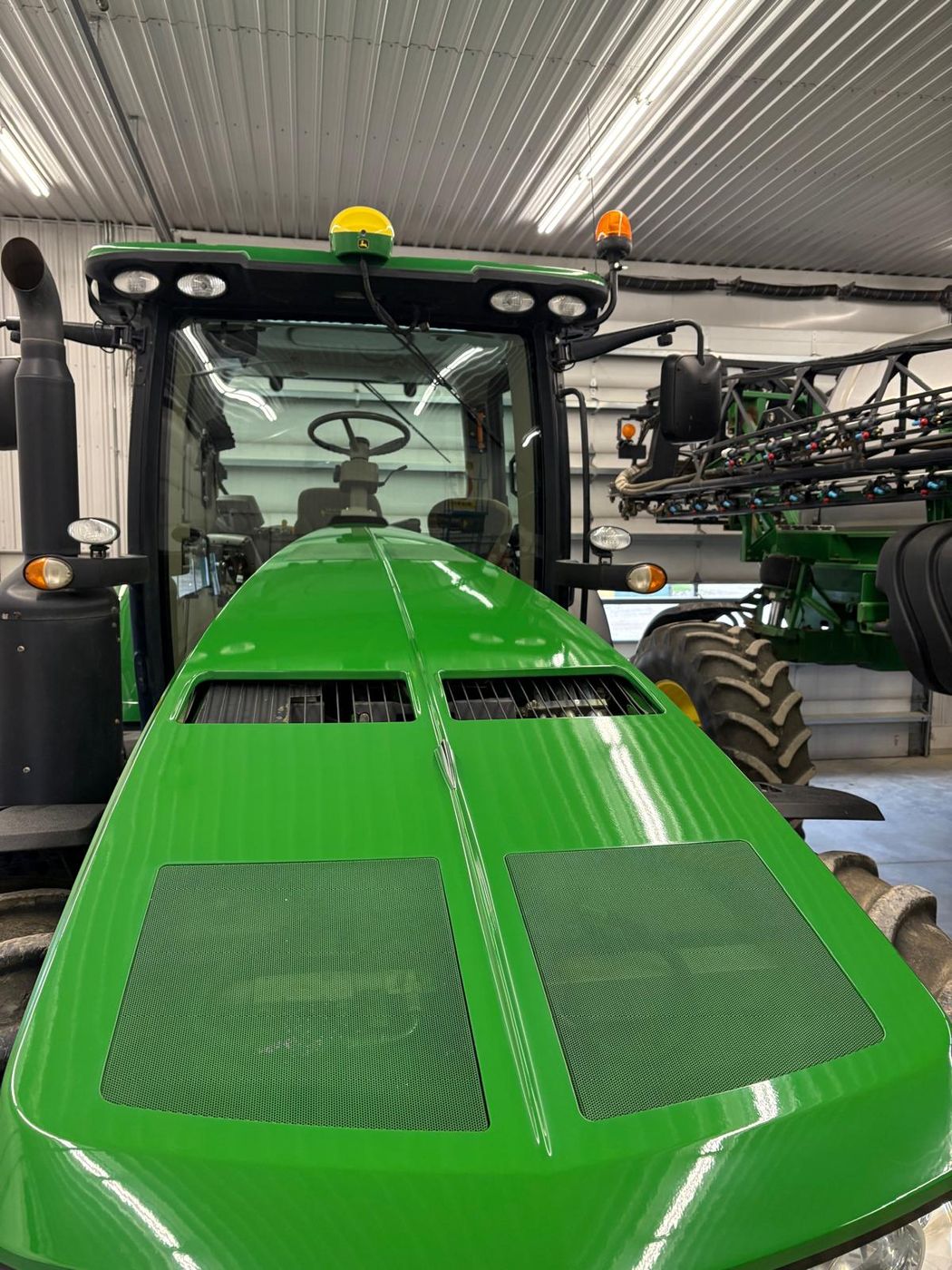
Before and after
on real machines.
What it costs.
Every machine is priced on its own, because size and condition change the work more than the model does. These are the starting points.
Straight wash and degrease runs $60 an hour if that's all you want. Travel inside about thirty minutes of Fergus is included, and past that it's $0.60 per kilometre. You get a firm number from me before I start, not after.
I need a water hookup at the machine. Everything happens on site, which means I need to be able to run a hose where the tractor is sitting. If the machine is out in a back field or parked at a yard with no water, we'll need to sort that out first. It's the single most common thing that turns into a problem on booking day, so it's worth a two second check before you call.
Where I go.
Fergus and Elora are home. Regular runs out to Guelph, Arthur, Mount Forest, Drayton, Alma, Belwood, Rockwood, Erin and everywhere in between. Anywhere in Wellington County is normal, and I go further for bigger jobs and for farm dispersal work where there's a line of equipment to get through.
Not sure if you're in range? Call and ask. I travel further than most people expect, especially for bigger jobs.